

Learning guitar scales is one of the most important steps in becoming a well-rounded musician. Scales provide the foundation for understanding melody, harmony, and improvisation. While they may seem repetitive or even boring at first, they are essential tools that help you develop finger strength, coordination, and familiarity with the fretboard. By practicing scales regularly, you build muscle memory that allows you to play more fluidly and confidently over time.
At the beginning, many guitarists start with the major scale, often considered the “mother of all scales.” It forms the basis for many other scales and musical concepts. Learning the major scale in different positions across the neck helps you understand how notes are arranged and how patterns repeat. This knowledge is crucial when transitioning to more advanced techniques like soloing or composing your own music.
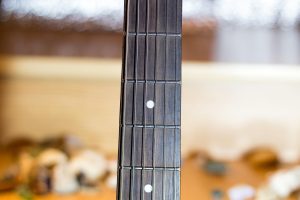
Another key scale to learn early on is the minor scale, which introduces a different emotional quality to your playing. While major scales tend to sound bright and happy, minor scales often evoke a more somber or introspective mood. Practicing both major and minor scales helps you develop emotional expression in your playing and gives you more versatility as a guitarist.
The pentatonic scale is especially popular among beginners and experienced players alike. It consists of only five notes, making it simpler to memorize and easier to apply in real musical situations. The minor pentatonic scale, in particular, is widely used in rock, blues, and pop music. Because of its simplicity and versatility, it’s often the first scale guitarists use when learning to improvise solos.
Consistency is key when practicing scales. Rather than rushing through them, it’s more effective to play slowly and focus on accuracy and tone. Using a metronome can help you maintain steady timing and gradually increase your speed. Over time, this disciplined approach leads to cleaner technique and better overall control of the instrument.
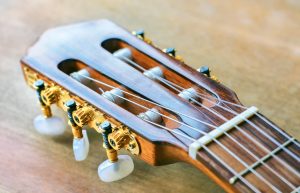
It’s also important to practice scales in different positions and keys. Many beginners make the mistake of learning a scale in only one position, which limits their ability to move freely across the fretboard. By exploring multiple positions, you gain a deeper understanding of how the guitar is structured and how scales connect across different areas of the neck.
In addition to technical practice, try to make scale practice more musical. Instead of simply playing notes up and down, experiment with different rhythms, phrasing, and dynamics. This helps you break out of mechanical playing and start thinking like a musician. Over time, you’ll begin to hear how scales can be used creatively rather than just as exercises.
Ear training is another important aspect of learning scales. As you practice, try to listen carefully to the sound of each note and how it relates to the others. Being able to recognize intervals and patterns by ear will improve your ability to play by feel and adapt to different musical situations. This skill becomes especially valuable when playing with other musicians.
Applying scales to real music is where everything starts to come together. Practice playing along with backing tracks or songs to see how scales fit into actual musical contexts. This not only reinforces your understanding but also makes practice more enjoyable and rewarding. You’ll start to see how scales are used in solos, riffs, and melodies you already love.

Ultimately, learning guitar scales is a long-term investment in your musical growth. While it may take time and patience, the benefits are undeniable. Scales improve your technique, expand your musical vocabulary, and open the door to improvisation and creativity. With consistent practice and a willingness to explore, scales can transform the way you play and understand the guitar.

Single Guitar Strings

Single Guitar Strings

Single Guitar Strings
.008 Slinky Coated Titanium Reinforced Plain Electric Guitar Strings 6 Pack

Single Guitar Strings
.009 Loop End Stainless Steel Plain Banjo or Mandolin Guitar Strings 6 Pack
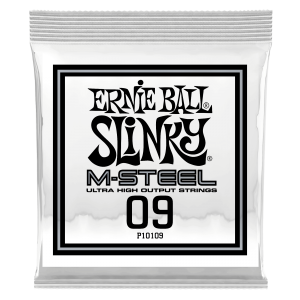
Single Guitar Strings

Single Guitar Strings

Single Guitar Strings

Single Guitar Strings
.009 Slinky Coated Titanium Reinforced Plain Electric Guitar Strings 6 Pack

Single Guitar Strings
.010 Loop End Stainless Steel Plain Banjo or Mandolin Guitar Strings 6 Pack

Single Guitar Strings

Single Guitar Strings

Single Guitar Strings

Single Guitar Strings
.010 Slinky Coated Titanium Reinforced Plain Electric Guitar Strings 6 Pack

Single Guitar Strings
.011 Loop End Stainless Steel Plain Banjo or Mandolin Guitar Strings 6 Pack

Single Guitar Strings

Single Guitar Strings

Single Guitar Strings

Single Guitar Strings
.011 Slinky Coated Titanium Reinforced Plain Electric Guitar Strings 6 Pack

Single Guitar Strings
.012 Loop End Stainless Steel Plain Banjo or Mandolin Guitar Strings 6 Pack

Single Guitar Strings

Single Guitar Strings

Single Guitar Strings
.012 Slinky Coated Titanium Reinforced Plain Electric Guitar Strings 6 Pack

Single Guitar Strings
.013 Loop End Stainless Steel Plain Banjo or Mandolin Guitar Strings 6 Pack

Single Guitar Strings

Single Guitar Strings

Single Guitar Strings
.013 Slinky Coated Titanium Reinforced Plain Electric Guitar Strings 6 Pack

Single Guitar Strings
.014 Loop End Stainless Steel Plain Banjo or Mandolin Guitar Strings 6 Pack

Single Guitar Strings

Single Guitar Strings

Single Guitar Strings
.015 Loop End Stainless Steel Plain Banjo or Mandolin Guitar Strings 6 Pack

Single Guitar Strings

Single Guitar Strings
.015 Slinky Coated Titanium Reinforced Plain Electric Guitar Strings 6 Pack

Single Guitar Strings
.016 Loop End Stainless Steel Plain Banjo or Mandolin Guitar Strings 6 Pack

Single Guitar Strings

Single Guitar Strings

Single Guitar Strings